
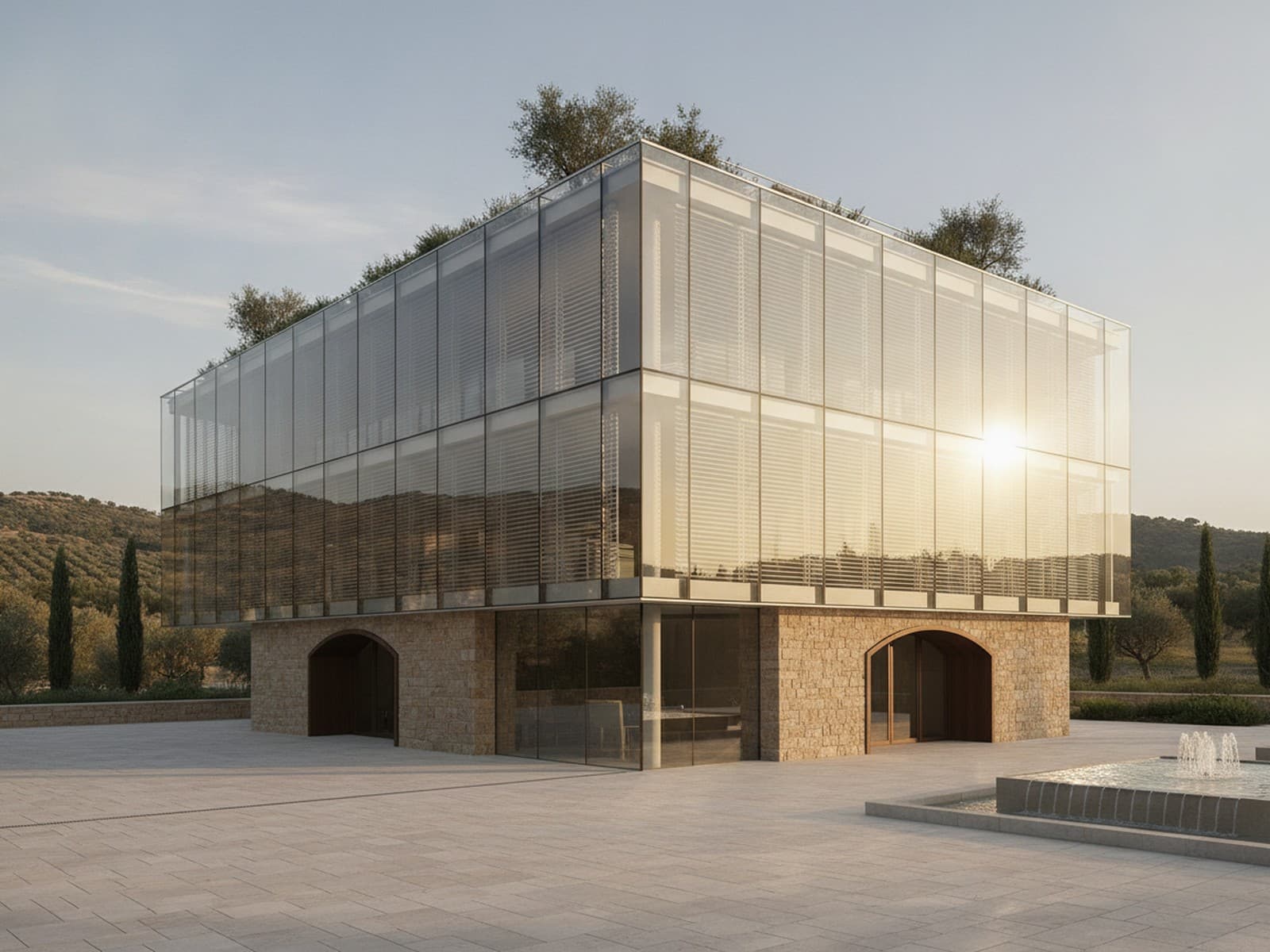
What a curtain wall is
A curtain wall is a lightweight, non-structural building envelope — the facade 'hangs' on the structure rather than carrying the building's load. It lets you wrap a building in glass and infill panels for daylight, views and a clean architectural skin, while the floors and columns do the structural work.
Stick vs unitised systems
Stick systems are assembled piece by piece on site — flexible and well suited to smaller or irregular facades. Unitised systems arrive as large factory-built panels that are craned into place, which speeds up installation and gives tight factory quality control — the usual choice on taller buildings and larger runs.
Both can carry vision glass, spandrel (opaque) panels, opening vents and integrated shading, and both are engineered with thermal breaks for performance.
Structural and spider glazing
Where you want the most minimal, frameless look, structural glazing bonds or fixes the glass so the framing reads almost invisibly, and spider (point-fixed) glazing holds panes on discreet stainless fittings — common for lobbies, atria and entrances that need to feel open and transparent.
What to consider — and how we work
Spans, wind and structural loads, thermal and solar performance, acoustics, and how the system meets floors and openings all feed the specification, and are engineered to the specific building. These systems are specified per project in bespoke sizes and volumes, not bought off a shelf.
Send your elevations and performance requirements and our contract desk will work the system up and quote it as part of the facade package.
Common questions
What's the difference between a stick and a unitised curtain wall?
A stick system is assembled from parts on site (flexible, good for smaller or irregular facades); a unitised system is delivered as large factory-made panels craned into place (faster, tighter quality control, usual on taller buildings).
Do you supply frameless or structural glazing?
Yes — structural glazing and spider (point-fixed) glazing for minimal, near-frameless looks, alongside stick and unitised curtain-wall systems, specified per project.
What's the difference between a curtain wall and ordinary windows?
A curtain wall is a continuous, non-structural skin that hangs on the building's frame and wraps it in glass and infill panels; ordinary windows are individual openings set within a wall. Curtain walling suits large, continuous glazed elevations where windows would not.
Can a curtain wall include opening vents and solar shading?
Yes. Alongside vision glass and spandrel (opaque) panels, curtain-wall systems can carry opening vents and integrated shading, and are engineered with thermal breaks — all specified for the building.