
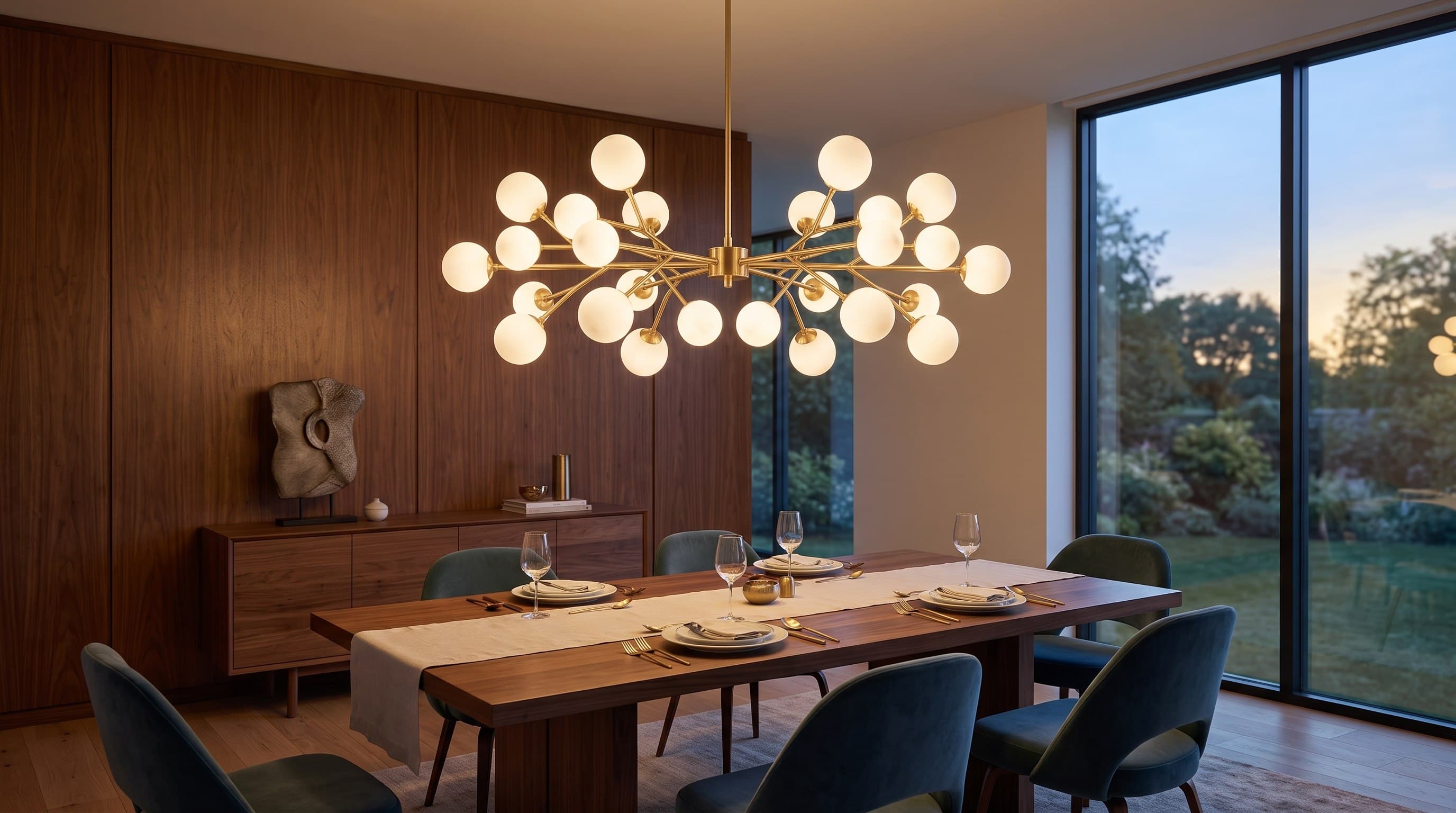
The three layers
Well-lit rooms combine three layers. Ambient (general) lighting fills the room with a comfortable base level. Task lighting puts light where you do things — over a worktop, beside a bed, at a desk. Accent lighting highlights features, art or texture and adds depth. Using all three, on separate controls, lets one room feel bright and practical or soft and relaxed.
Match the light to the room
Kitchens need strong task light over worktops, plus ambient and often under-cabinet accent light. Living rooms lean on ambient and accent layers with the odd task light for reading. Bedrooms want soft ambient light and bedside task lighting. Bathrooms need even, shadow-free light around mirrors.
Fittings, dimming and colour
Choose fittings for each layer — pendants and chandeliers as features, downlights or wall lights for ambient, under-cabinet and reading lights for task, and discreet fittings for accent. Dimming and separate switching are what make layers work. Keep the colour temperature of the light consistent within a space for a calm result.
How we supply lighting
We supply decorative and architectural lighting — chandeliers, pendants, wall lights and lamps — made to order and customisable in size, finish and lamping, and coordinated with the rest of the fit-out. Tell us the rooms and the look and we'll help plan the layers and quote it.
Common questions
What are the three types of lighting?
Ambient (general) lighting for the base level, task lighting where you need to see to do something, and accent lighting to highlight features and add depth. A well-lit room uses all three, ideally on separate controls.
Why does a single ceiling light not feel right?
One central light gives flat, even light with no depth or focus, and leaves work areas and corners under-lit. Adding task and accent layers — and dimming — makes a room both more practical and more inviting.
What lighting is best for a kitchen?
Strong task lighting over worktops and the hob, good ambient light overall, and often under-cabinet and accent lighting. Separate switching lets you move between working and relaxing.
Do you supply both decorative and architectural lighting?
Yes — statement chandeliers and pendants through to wall lights, lamps and more architectural fittings, made to order and coordinated with the rest of the project.