
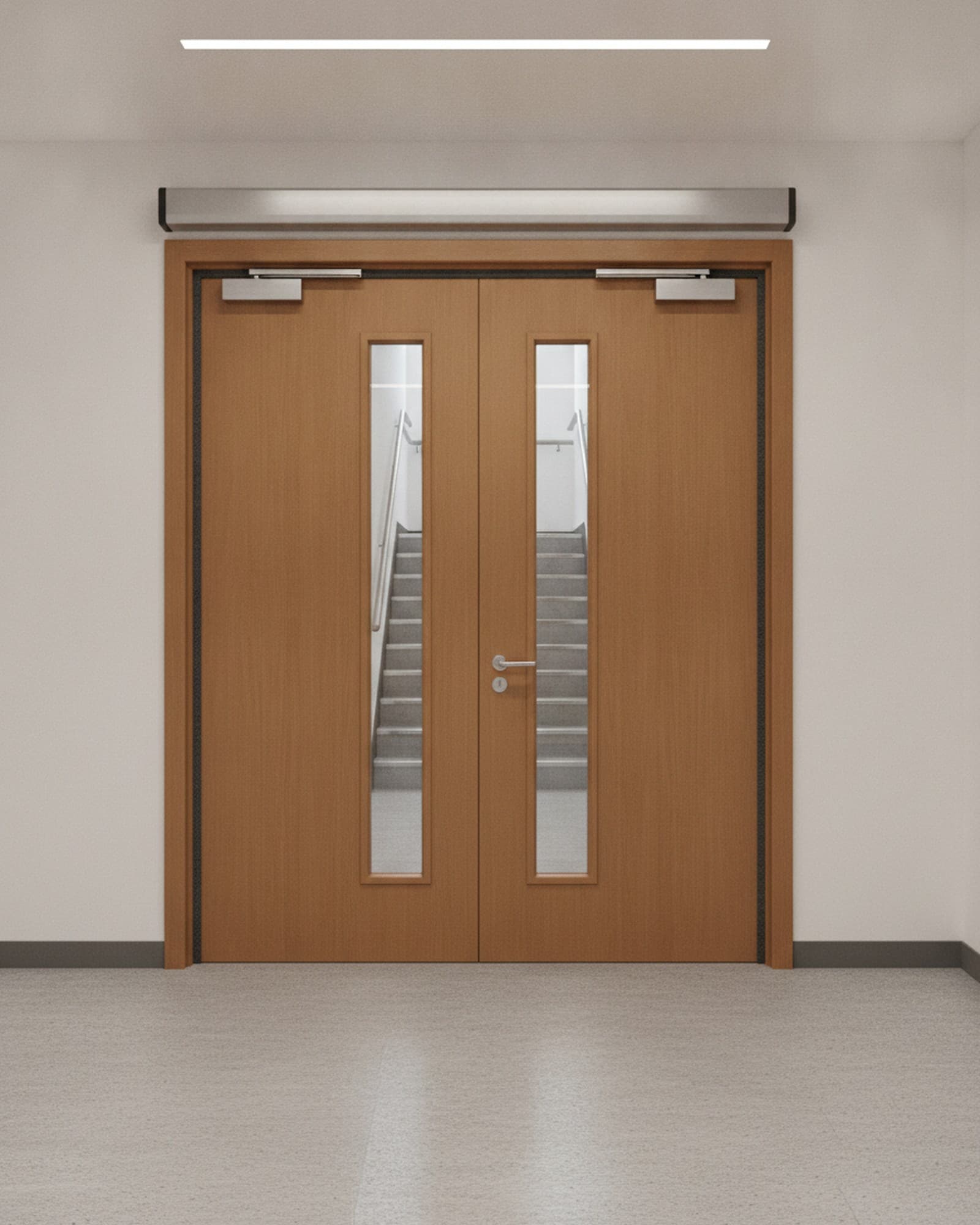
What the rating means
The number after 'FD' is the minutes of fire resistance the complete door set is designed to provide: FD30 is 30 minutes, FD60 is 60. The rating buys time — it slows the spread of fire and smoke so people can escape and the building can be protected.
Crucially the rating applies to the door set as a whole, tested together: the leaf, the frame, intumescent and smoke seals, the hinges and locks, and the closer. Swapping in the wrong ironmongery or omitting a seal can undermine the rating, which is why fire doors are supplied and specified as a complete, matched set.
FD30 vs FD60 — typical use
FD30 is the most common rating in flats, corridors and escape routes in many residential and light-commercial settings. FD60 is used where a longer protection period is required — often larger or higher-risk commercial buildings, certain stairwells and plant or service areas.
Which rating a specific opening needs is set by the building's fire strategy — its use, layout, escape routes and number of storeys. That's determined by the project's designers, the responsible person or a fire engineer, not by the door itself; we supply to the specification you give us.
Vision panels and finishes
Fire doors can include glazed vision panels (fire-rated glass in a tested configuration) where you need to see through — common in offices and corridors — and come in the same range of finishes as the rest of the door range, so they don't have to look utilitarian.
How we supply fire doors
We supply FD30 and FD60 door sets made to your opening sizes and ironmongery schedule, as part of the wider door package for the project. Send your door schedule and fire strategy requirements and we'll quote the sets to match.
Common questions
What is the difference between FD30 and FD60?
FD30 provides 30 minutes of fire resistance and FD60 provides 60. Which you need depends on the building's fire strategy — its use, escape routes and storeys — which your designers or a fire engineer determine.
Does the whole door set need to be fire-rated?
Yes. The rating is tested on the complete set — leaf, frame, seals, hinges, locks and closer — so all the components must match the specification. We supply the door set complete.
Who decides whether an opening needs FD30 or FD60?
The building's fire strategy does — its use, layout, escape routes and number of storeys. That is determined by the project's designers, the responsible person or a fire engineer, not by the door itself. We supply to the rating you specify.
Can a fire door have a glazed vision panel and still match our other doors?
Yes. Fire doors can include vision panels in fire-rated glass in a tested configuration, and come in the same range of finishes as the rest of the door range — so they can match the scheme rather than look utilitarian.